Episodes
Nov. 13, 2024
177 - Physics-Based Modelling of Fire Spread with Francesco Restuccia
Wildfire modelling is quite complicated when you wish to integrate different fuel packages with different properties in 'real' environmental conditions while managing the transition to/from smouldering. We have a model for each, but how do we make them work in unison without relying too much on their users' skills? This is a subject for a good research grant... a very big one. And this is something 'we' just got! A fire scientist from King's College London, Dr Francesco Restuccia, has just secu...
Nov. 6, 2024
176 - The Myth of Panic with Daniel Nilsson
You are not supposed to use the word 'panic' in the context of human behaviour in fires, yet this episode contains 196 instances of it. Why? because we try to get to the bottom of the thing! Can panic be both a myth and a reality? Join us as we challenge the age-old narratives of panic in emergencies with our distinguished guest, Professor Daniel Nilsson, from the University of Canterbury in Christchurch, New Zealand. We unravel the misconceptions surrounding human behaviour during fires, spotl...
Oct. 30, 2024
175 - Changes in the UK fire regulations with Dame Judith Hackitt
The Grenfell Tower tragedy has triggered a Public Inquiry (which just published their final report), and concurrently - a review of the UK Building Regulations and Fire Safety. The latter task was given to Dame Judith Hackitt, a former Head of the Health and Safety Executive and a chemical engineer. In this interview Dame Judith Hackitt lends her voice to a pressing dialogue on fire safety reform following the Grenfell Tower tragedy. She uncovers the systemic flaws that allowed such a disaster ...
Oct. 23, 2024
174 - My predictions for AI in fire
AI is changing the world. But can artificial intelligence truly revolutionize fire safety engineering? In this episode I took out my crystal ball, and tried to find answers in what aspects of fire engineering we could truly see a revolutionary impact of AI, and where it is more a disturbing gadget with no real application... Overall, working in the space for many years, and having talked with many luminaries of the use of AI, I would say my expectations are toned down a lot. I am still excited,...
Oct. 16, 2024
173 - Pathway to scalable fire CFD
CFD is the most talked-over subject in the Fire Science Show. There are two reasons for that: one, it is interesting and relevant for so many of the Audience, and two, it's something I do for a living. There is also another reason: there are a lot of ideas and concepts of how CFD could be used "better", yet I struggle to see them make an impact in the world of practical engineering. I would love to see the CFD being used in fire as it is in aerospace or Formula1 industries, yet, there are some ...
Oct. 9, 2024
172 - Lessons from mass timber experiments with Danny Hopkin
One could argue full-scale experiments on fire phenomena are the most enriching for our knowledge as the fire community. The costs associated with them and logistical nightmares of organizing them make them an uncommon sight. However, in an instance where we reach the boundaries of our knowledge, they are necessary to progress further. That was the case of the research programme carried out by the OFR, in the umbrella of Structural Timber Association Special Interest Group (SIG) - CLT compartme...
Oct. 2, 2024
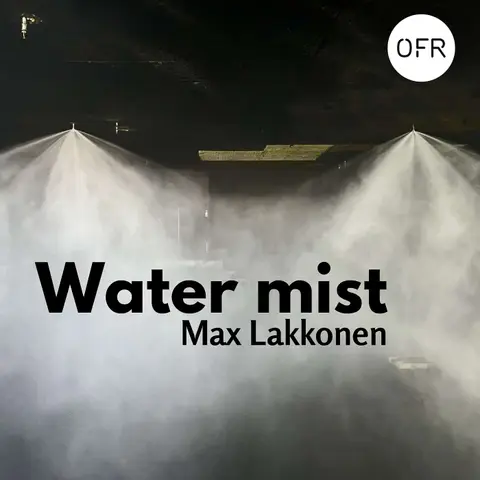
171 - Exploring Water Mist Systems with Max Lakkonen
I approach modelling water mist with caution. Not that I don't understand it, but because I lack clarity in the goals and objectives, as well I'm usually aware I may not deliver the expectations of my clients in terms of the physical phenomena I am capturing... And I'm not the only one like this. In this podcast episode I explore the world of water mist with Dr Max Lakkonen from IFAB, who has just been chosen as the new President of the International Water Mist Association (IWMA), Max dives int...
Sept. 25, 2024
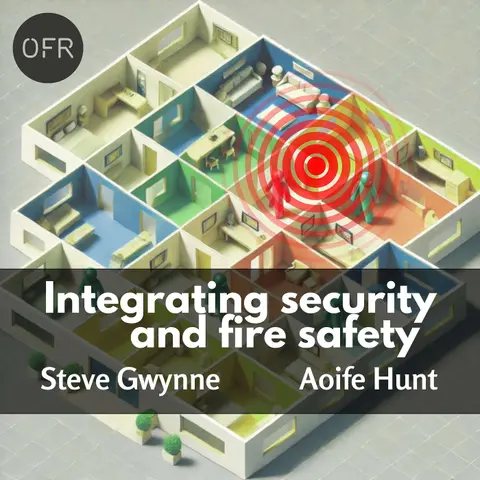
170 - Integrating Fire Safety and Security Objectives with Stewe Gwynne and Aoife Hunt
What happens to controlled doors when a fire is detected in the building? They unlock. Elevators? They go down. People are guided somewhere, and the fire strategy is executed. As it should. But what if the real threat is not the fire itself? What if the real threat is using the fire as a decoy or, worse, as a tool? What if the threat has intelligence, motives and the ability to adapt to the actions of our systems? Now, this is a frightening scenario. A scenario in which the security objectives...
Sept. 18, 2024
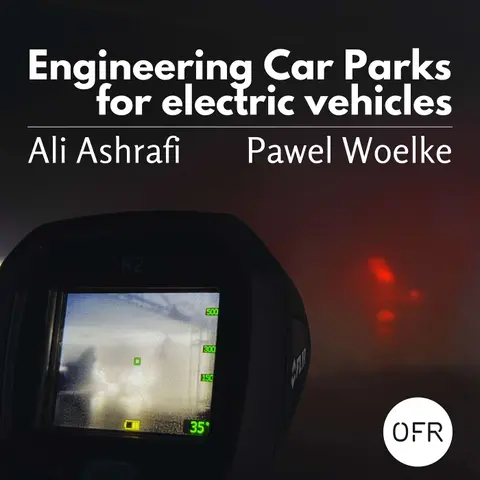
169 - Engineering car parks for EV's with Ali Ashrafi and Pawel Woelke
EVs are becoming more of a 'normal' part of fire safety engineering rather than an 'exotic problem'. I've invited two colleagues from Thornton Tomasetti - Ali Ashrafi and Pawel Woelke, to discuss what this engineering looks like. In the episode, we discuss insights into how fire risks differ between electric and internal combustion engine vehicles and why the focus is shifting from cars to more pressing hazards like electric scooters and energy storage systems. We explore the different approach...
Sept. 11, 2024
168 - Fires in Waste Industry with Ragni Fjellgaard Mikalsen
Fires in the waste industry are not discussed much unless one sees a giant smoke plume in the media, followed by advice to close your windows. In these (rare?) cases, we remind ourselves of the massive industry related to storing, sorting and recycling garbage, and the obvious environmental hazards such fires pose. From 2017 to 2020, Poland experienced a challenging time with fires at landfills, primarily caused by arson or negligence. A bit later, when I was working on my chapter for the Handb...
Sept. 4, 2024
167 - CFD for consequences and fire growth with Jonathan Hodges
In this episode we talk with Jonathan Hodges of the Jensen Hughes on his experience with using advanced modelling in the realm of fire safety engineering. Jonathan sheds light on how the modelling is used at various Jensen Hughes offices around the world, highlighting interesting differences they see across their practice. The core of the talk revolves around using CFD for modeling the consequences of fires, versus using it to assess the fire growth. While the first one is a commonly practiced ...
Aug. 28, 2024
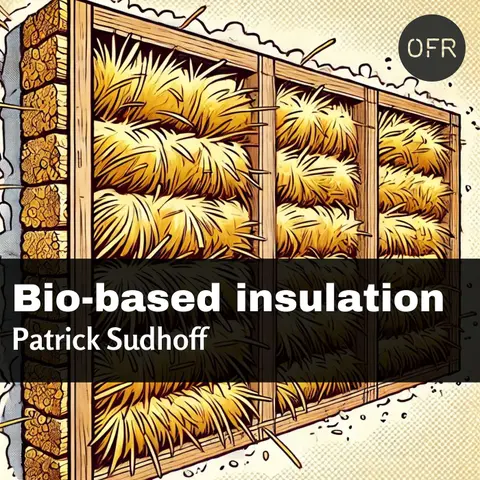
166 - Bio-based insulation with Patrick Sudhoff
In the everchanging world every now and then we get a new driver, that dictates most of our choices. In the current built environment and building industry, carbon dioxide feels like such a driver. We don't like it, we want to get rid of it... One way is to sequester or store large amounts of CO2 in our buildings. Ways to do that - more obvious is mass timber, but thats not the only thing. Let's talk bio-based insulation. In this episode I've invited Patrick Sudhoff, now from DBI but the resear...
Aug. 21, 2024
165 - Best Practice vs. Appropriate Practice with Arnold Dix
Is the "best practice" always the best approach to solving an engineering problem? Can we consider "best" and "appropriate" practices synonymous, and if not - how big is the gap between them? Join us as we welcome Professor Arnold Dix back to challenge conventional wisdom in engineering. Focusing on the nuanced distinction between "best practice" and "appropriate practice," we explore how context-sensitive solutions outperform complex and costly standards. Using real-world examples like tunnel v...
Aug. 14, 2024
164 - Experiences with AI with Xinyan Huang
The last time I had Xinyan on the show was in 2021, and we were all excited about the possibilities that AI could bring to Fire Safety Engineering and Smart Firefighting. Three years have passed, and while we are still excited, we can now talk about experiences. What worked and what did not? Where were the challenges, and what was simple? You can only learn that from brainstorming, you learn this by doing. Xinyan's team implemented dozens of algorithms for various projects, and it is this experi...
Aug. 7, 2024
163 - Fire Fundamentals pt 11 - Soot in Fire Safety Engineering
Soot is perhaps the most complex product of combustion, and at the same time one of the most profound for our everyday fire safety engineering. The topic of soot is not getting much love in the world of fire science, so I’ve chosen to give you a broad introduction to this subject. In this episode of fire fundamentals we will go through: · Soot creation from chemical perspective; · Soot creation from practical perspective; · Soot effects on radiation, toxicity and obscuration; · Extinction co...
July 31, 2024
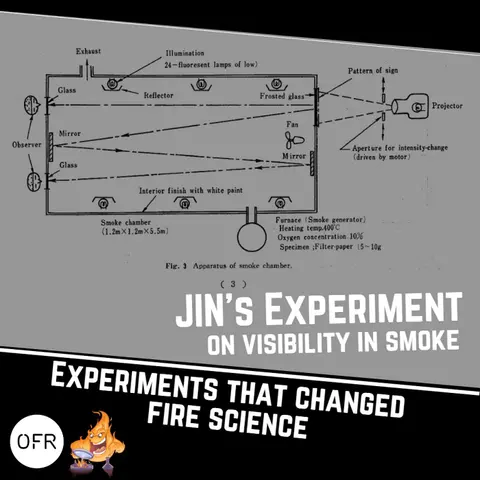
162 - Experiments that changed fire science pt. 9 - Jin's experiment on visibility in smoke
In this episode of Experiments that Changed Fire Science we cover T. Jin’s experiments on the visibility in smoke – two experiments carried out in 1970 and 1971 in Japan that truly changed the way how we model fires and how we design fire safety in our buildings. This episodes presents my recollection of Jin’s experiments, based on the published work – the seminal paper at the IAFSS in 1997 (https://publications.iafss.org/publications/fss/5/3/view/fss_5-3.pdf) and the original material publishe...

July 24, 2024
161 - Community evacuation with Enrico Ronchi and Max Kinateder
Is evacuation of a community during a wildfire largely different from evacuation of a building? How much of the knowledge from the building fires is directly useful in planning and managing such an event, and what stuff is completely different? These are the lead questions for my today's interview with prof. Enrico Ronchi from Lund University and dr Max Kinateder from National Research Council Canada. Both guests currently research the evacuation layer of the WUI problem – starting with the res...
July 17, 2024
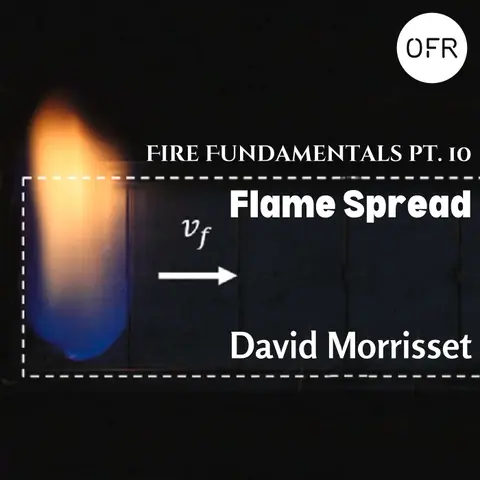
160 - Fire Fundamentals pt 10 - Flame Spread with David Morrisset
In the episode 10 of fire fundamentals together with David Morrisset, a nearly graduated PhD student from the University of Edinburgh, we explore the intricate dynamics of flame spread and its crucial role in fire safety engineering. David helps us differentiate between the two primary modes of flame spread, concurrent (imagine upward spread) and opposed (imagine downward spread), and explains how understanding these mechanisms can significantly enhance building safety and fire risk mitigation. ...
July 10, 2024
159 - The WUI Problem with Michele Steinberg and Birgitte Messerschmidt
With two Directors at NFPA - Michele Steinberg and Birgitte Messerschmidt, I'm trying to find an answer to a burning question - "what really is the WUI problem?" The WUI is not just a line on a map with an X distance from the forest... In this episode we try to define what it is, and who is in danger. Instead of our usual conversations looking into characteristics of burning forests, or seeking the impact of detailing in construction, in this episode we try to take a birds eye view and identify ...
July 3, 2024
158 - Fire Fundamentals pt. 9 - Know you boundaries (in CFD)
In today's Fire Science Show, we talk about how boundary conditions can make or break your fire simulation models. We'll explore boundary conditions' fundamental role in defining how simulations interact with their environments and how mastering these can lead to more accurate and reliable fire simulation models. I hope we break down some complex topics into manageable insights. Also, I hope we've turned something really boring into an interesting and fun episode. We discuss: 1. Boundaries inte...
June 26, 2024
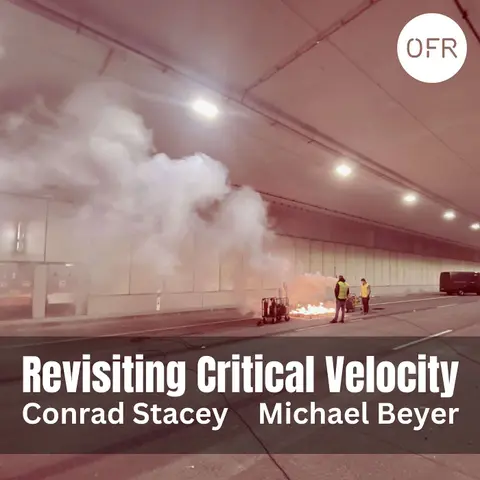
157 - Revising Critical Velocity with Conrad Stacey and Michael Beyer
A critical velocity episode... who would have thought? Even though I'm not an enthusiast of this approach, I have to admire the new science and researchers striving to improve it. This week I welcome Conrad Stacey and Michael Beyer from Stacey Agnew to talk about their recent developments. We'll take you through the historical development of this concept since its inception in 1958, examining key variables like tunnel height and heat release rate along the way. We go into the Memorial Tunnel ex...
June 19, 2024
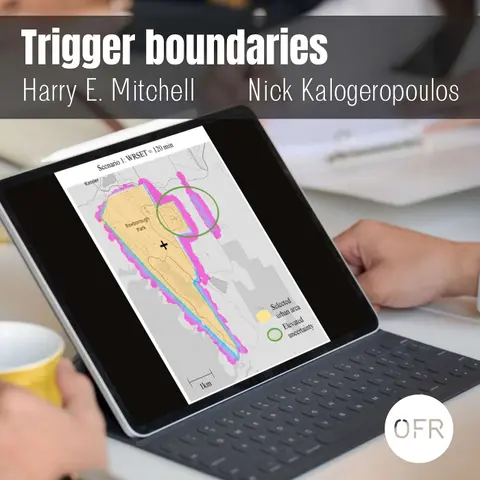
156 - Trigger Boundaries with Harry Mitchell and Nick Kalogeropoulos
What if you could predict the last possible time to evacuate your community before a wildfire wreaks havoc? What if you had that knowledge years before the wildfires happened and built up your preparedness based on this knowledge? What if you knew how this boundary changes with wind, dry weather and direction? I think you get a knowledge-based decision model, and that is exactly what my guests today have been looking for. Join us as we explore this cutting-edge approach with Imperial Hazelab Dr...
June 12, 2024
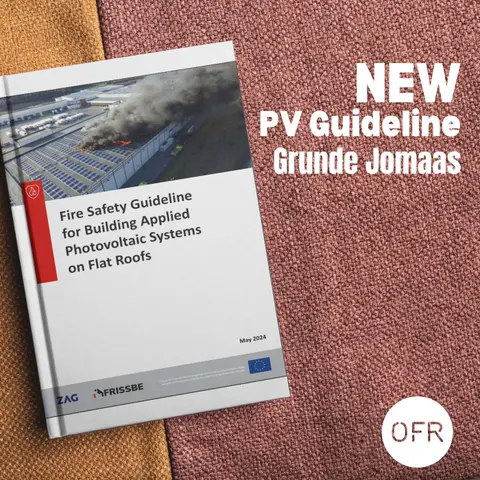
155 - New Guideline for PV Fire Safety with Grunde Jomaas
Misconceptions in fire science are a strange thing. You present countless proof, publish research papers, and carry conversations, and yet… they live their own lives—spreading with no control and cluttering communication. One space is full of them—the fire safety of photovoltaic installations on flat roofs. In the Fire Science Show, we already had two very powerful episodes on PV—one with Jens Kristensen and one more recently with Reidar Stølen. In today's episode, we highlight a new guidelin...
June 4, 2024
154 - Fire Fundamentals pt. 8 - Compartment Fire
Happy birthday, Fire Science Show! On the 3rd Anniversary of the podcast launch, I'm thrilled to deliver an episode on one of the most fascinating aspects of fire science - the compartment fire. Instead of going through the usual curriculum of the phases of fire, transitioning into flashover and flashover itself, I instead focus on the methodology's practical aspects. Which parts of the building have the largest impact on the fire? What is the impact of the opening? How much fuel matters? What ...